How to Train for a Triathlon With Gym Machines
 0
0
 0
0
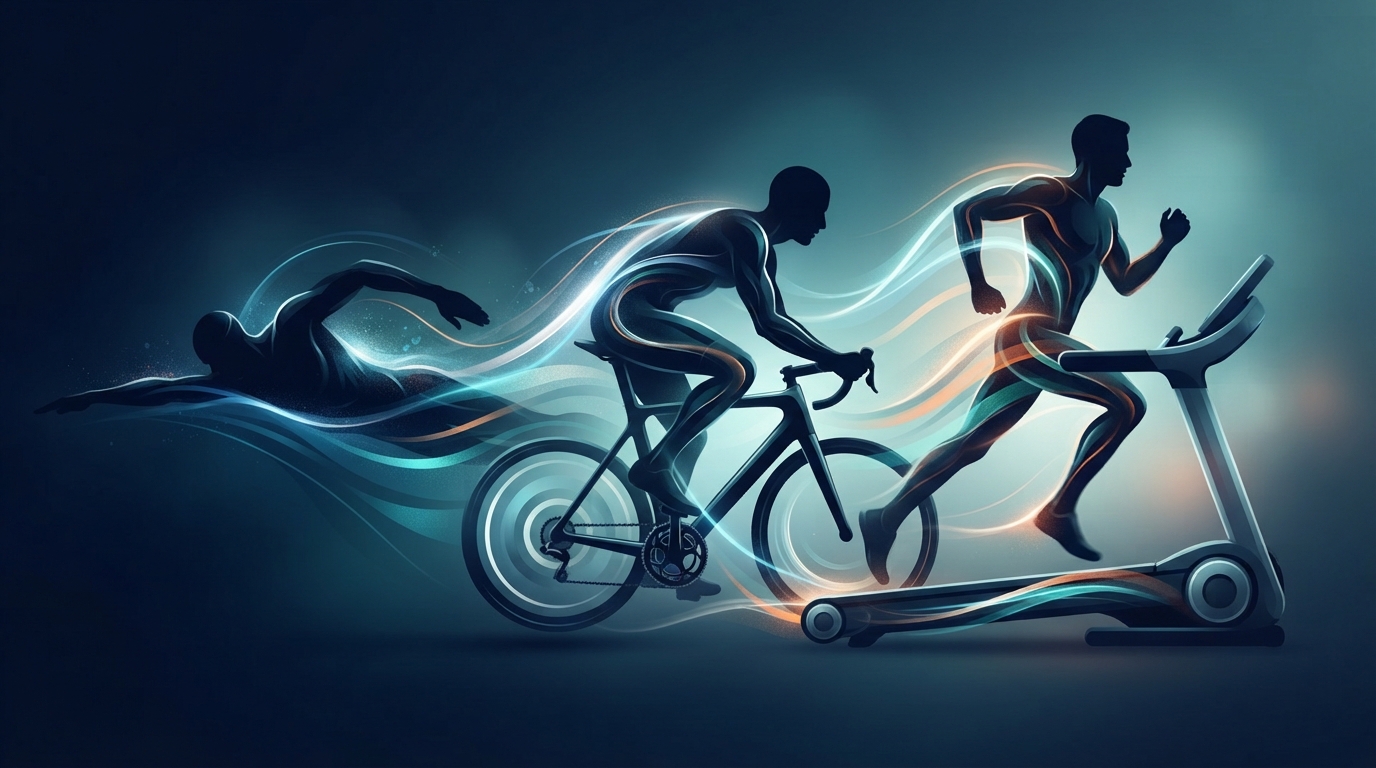
Winter rain, a busted bike trainer, or a pool that’s closed for maintenance shouldn’t derail your triathlon build. I’ve coached plenty of athletes who assumed a gym floor full of machines was a poor substitute for open water, roads, and trails. That assumption is wrong. Used with intention, gym equipment builds the exact engine and mechanics a triathlon demands, and in some ways it does the job better than outdoor training because you control every variable.
This guide breaks down how to structure a real triathlon program using machines you’ll find in almost any commercial gym. No guesswork, no filler exercises. Just a system that mirrors the demands of swim, bike, and run.
Why Gym Machines Work for Triathlon Training
Triathlon is about pacing, muscular endurance, and the ability to switch between disciplines without your legs falling apart. Machines let you isolate each of those qualities with precision.
A treadmill holds a pace better than your own legs on a windy road. A stationary bike lets you nail exact wattage targets without traffic lights breaking your rhythm. Rowing machines and swim ergs build the pulling strength and aerobic base that translate directly to swim performance. The controlled environment removes excuses and lets you focus purely on output.
There’s also a durability argument. Machines reduce impact variability and let you dial in cadence and resistance, which is valuable when you’re managing an injury or building volume carefully during a base phase.
Building Your Swim Fitness Without a Pool
The Swim Erg
If your gym has a swim erg like the WaterRower or a Vasa Trainer, use it. These machines replicate the pulling motion of a swim stroke and build the exact shoulder and lat endurance you need for open water.
Start with intervals: 10 rounds of 1 minute hard, 1 minute easy. As your season progresses, extend the hard intervals to 3 to 5 minutes to mimic race-pace swim segments.
Lat Pulldown and Cable Rows
Without a swim erg, cable machines are your next best option. The lat pulldown and seated cable row train the same muscle groups responsible for your swim pull, your lats, rear delts, and triceps.
Use high-rep, moderate-resistance sets of 15 to 20 reps to build muscular endurance rather than raw strength. Triathlon swimming rewards a stroke you can repeat for 30 to 90 minutes, not a single powerful pull.
Bike Training on Stationary Machines
Spin Bikes and Smart Trainers
A quality spin bike or gym-based smart trainer is close to the real thing. You can train cadence, power, and pacing with more accuracy indoors than out on the road.
Structure your rides around these building blocks:
- Endurance rides: 45 to 90 minutes at a conversational effort, roughly 65 to 75 percent of max heart rate
- Tempo intervals: 4 sets of 10 minutes at a sustainable hard effort, 2 minutes easy between sets
- Race simulation: 20 minutes at your target race watts or heart rate, practicing the exact effort you’ll hold on race day
- Cadence drills: 5 minutes at 100+ RPM with light resistance to build leg speed and pedaling efficiency
Recumbent and Upright Bikes
If a spin bike isn’t available, standard gym bikes still work. They’re less specific to a road bike position, but they build the aerobic base and leg strength you need. Adjust seat height so your knee has a slight bend at full extension, matching your outdoor bike fit as closely as possible.
Running Strength and Speed on the Treadmill
The treadmill is arguably the most valuable machine for triathletes because pacing control is everything in a race. You can lock in exact race pace and hold it, something nearly impossible outdoors with wind, hills, and traffic.
Here’s a sample treadmill session breakdown for different training goals.
| Session Type | Structure | Purpose |
|---|---|---|
| Easy aerobic run | 30 to 60 min at conversational pace | Builds base fitness, aids recovery |
| Tempo run | 20 min warm-up, 20 min at threshold pace, 10 min cool-down | Improves lactate threshold |
| Race pace intervals | 6 x 5 min at goal race pace, 2 min walk recovery | Trains pacing discipline |
| Hill simulation | 8 x 2 min at 6-8% incline, easy jog recovery | Builds leg strength and running economy |
| Brick prep run | 20 min immediately after a bike session | Trains the run-off-the-bike feel |
Don’t skip that last one. Running on tired, bike-loaded legs is a skill, and the treadmill lets you practice it right after a stationary bike session without leaving the building.
Strength Training That Supports All Three Disciplines
Machines aren’t just for cardio. A smart strength routine, built around leg press, cable machines, and a rowing machine, reinforces the muscles that keep your form solid deep into a race.
Focus on these movements twice a week:
- Leg press: builds quad and glute strength for both cycling power and running drive
- Seated cable row: reinforces posture and pulling strength for swimming
- Cable woodchoppers: builds rotational core strength, which stabilizes your stroke and running gait
- Standing calf raise machine: protects against Achilles and calf strain from repeated running volume
- Assisted pull-up machine: builds upper body pulling strength that carries over to swim power
Keep reps in the 12 to 15 range for most of the season. Save heavier, lower-rep strength work for your off-season when you’re not stacking high training volume on top of it.
Putting It Together: A Sample Weekly Structure
A realistic week blending machine-based training might look like this. Monday is an easy treadmill run paired with core work. Tuesday is a spin bike interval session. Wednesday is swim erg or cable pulling work plus full-body strength. Thursday is a tempo treadmill run. Friday is an easy recovery day or light mobility work. Saturday is your longest bike session, ideally on a smart trainer for accuracy. Sunday closes the week with a brick session, bike into a treadmill run, to train that transition feeling.
This structure hits every discipline, builds strength, and still allows recovery, all without stepping outside.
Key Takeaways
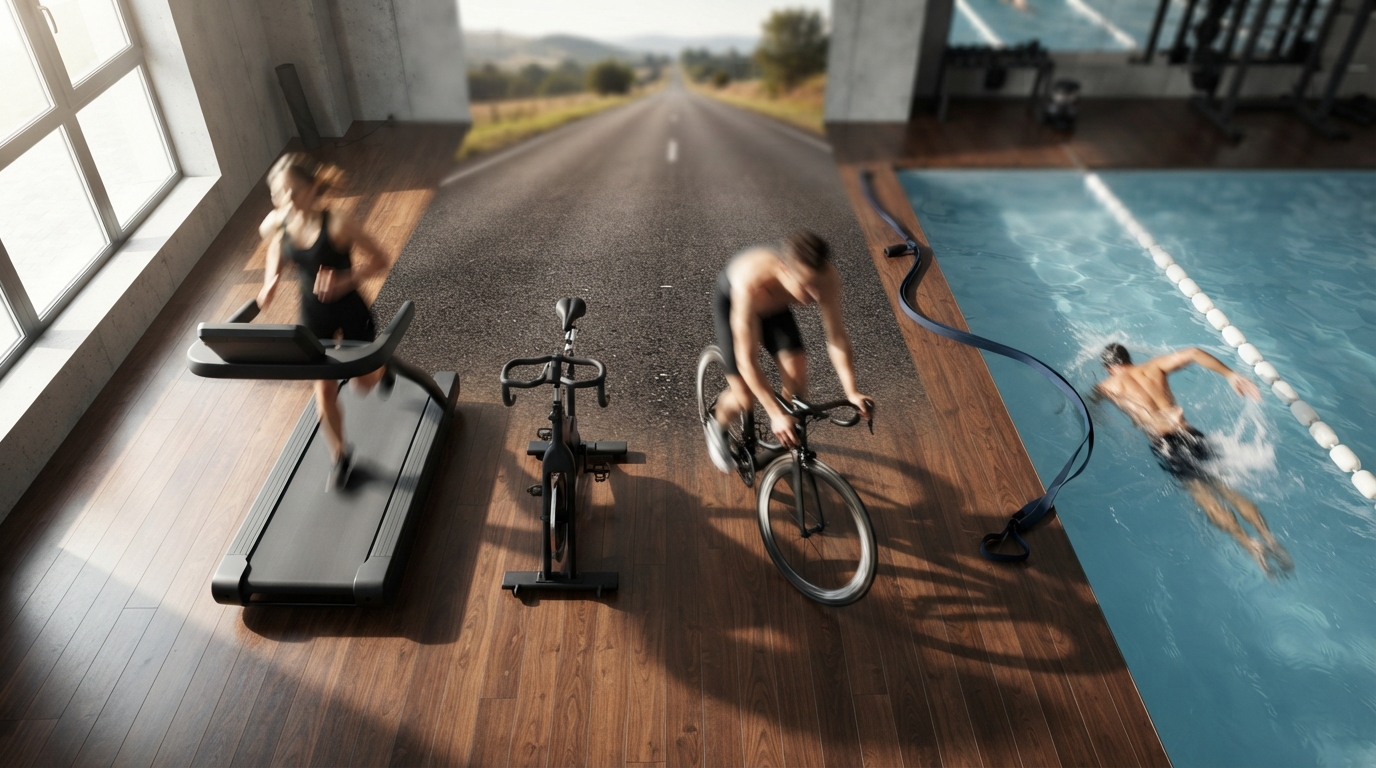
Gym machines give you precision that outdoor training can’t always offer. Swim ergs and cable machines build your pulling endurance, spin bikes and smart trainers dial in cycling power, and the treadmill sharpens pacing and running economy. Add structured strength work twice a week and you’ve built a complete triathlon program indoors.
Don’t wait for perfect weather or pool access to make progress. Walk into your gym this week, pick two or three of these sessions, and start stacking consistent training weeks. Race day rewards preparation, not the venue where you built your fitness.