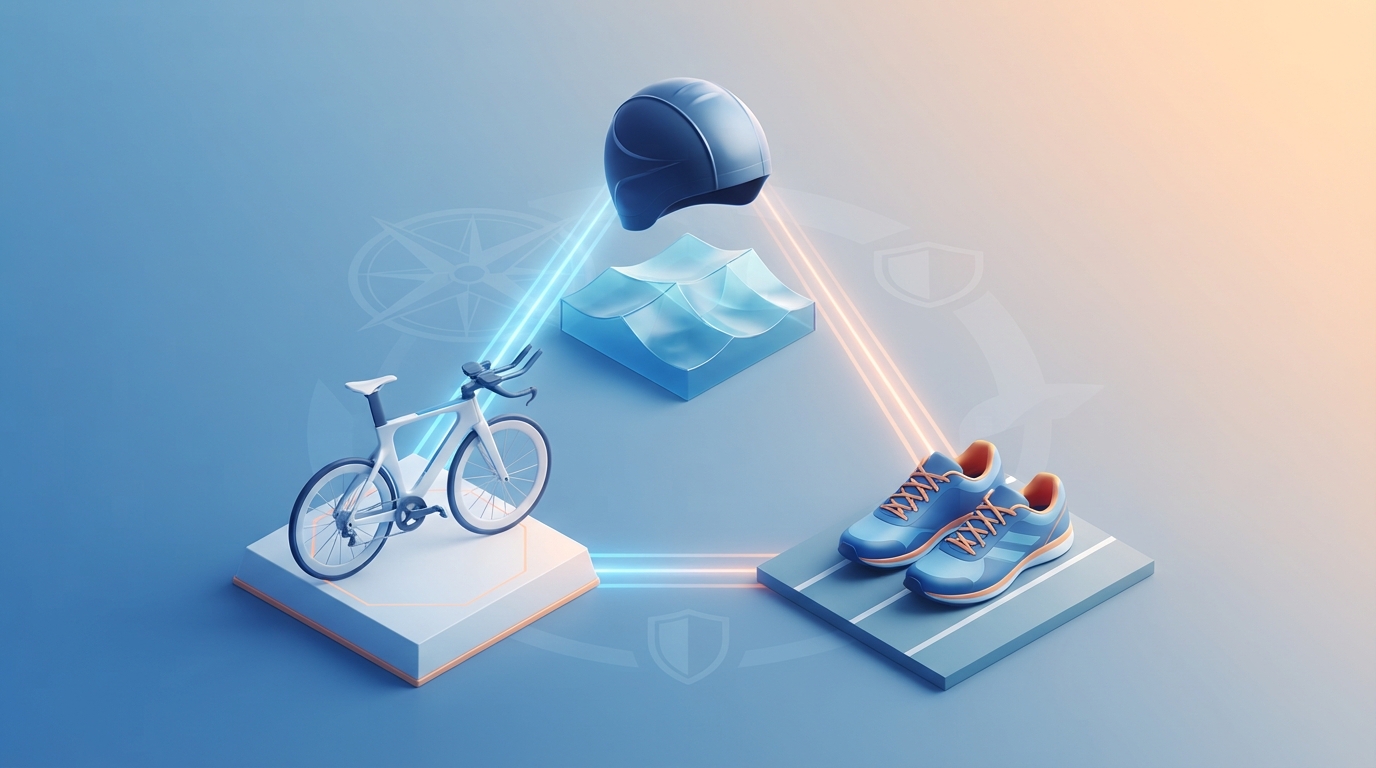
9 Essential Tips To Survive Your First Triathlon
 0
0
 0
0
Your first triathlon will humble you in ways you can’t predict from the couch. I’ve watched hundreds of first-timers cross that finish line, and I’ve seen the panic in the water, the wobbly legs out of T2, the mid-run walk breaks nobody planned for. None of that means you’re not ready. It means triathlon has a learning curve that no amount of single-sport fitness fully prepares you for.
The good news is that most rookie mistakes are predictable and preventable. I’ve broken down the nine things that matter most, based on what actually trips people up on race day. Get these right and you’ll spend less energy surviving and more energy racing.
1. Practice Transitions Like They’re a Fourth Discipline
Transitions get nicknamed the “fourth discipline” for good reason. I’ve seen athletes lose five or six minutes fumbling with socks, wetsuits, and gear they never rehearsed with.
Set up a mock transition area in your garage or driveway. Practice the exact sequence: wetsuit off, helmet on before you touch the bike, sunglasses, race number, shoes. Do this ten times and it becomes muscle memory instead of a stress event.
Quick transition wins:
- Use elastic laces on your run shoes so you skip tying knots
- Put your helmet on the aero bars, upside down, with sunglasses tucked inside, so you never forget it
- Practice the wetsuit peel while standing on one leg, it’s faster than sitting
2. Respect the Swim Start
The swim is where most first-timers lose their nerve, and I get it. A pack of 200 people thrashing around you feels nothing like your quiet lane at the local pool.
Start toward the back or side of the group instead of the front middle. You’ll avoid the worst of the washing-machine chaos and settle into a rhythm faster. If you panic, stop, tread water, breathe, and let a lifeguard or kayak know if you need a break. There’s no shame in grabbing a paddleboard for ten seconds to reset.
3. Train in the Gear You’ll Race In
Race morning is the worst time to discover your tri suit chafes or your goggles fog up. I’ve seen athletes take a DNF because they wore brand new shoes for the first time on race day and ended up with blisters by mile two of the run.
Test everything in training, ideally in conditions similar to race day. That means open water swims in your actual wetsuit, brick workouts in your race kit, and long runs in the exact shoes and socks you’ll wear.
4. Fuel Before You’re Hungry
Nutrition mistakes sneak up on you because they don’t show symptoms until it’s too late to fix them. Waiting until you feel depleted means you’ve already blown your energy reserves.
A simple rule: start fueling within the first 20 minutes of the bike leg, then keep a consistent intake schedule rather than reacting to hunger.
| Race Distance | Pre-Race Meal (3 hrs before) | On-Course Fueling |
|---|---|---|
| Sprint (750m/20k/5k) | Light carbs, banana, toast | Water, maybe one gel |
| Olympic (1.5k/40k/10k) | Oatmeal, banana, coffee | 1 gel per 45 min, water/electrolytes |
| Half Iron (1.9k/90k/21k) | Full breakfast with carbs and some protein | 200-300 calories/hour, alternating gels and real food |
5. Pace the Bike Like You Mean to Run Afterward
The bike leg feels deceptively comfortable because you’re seated and moving fast. Riders who hammer every hill and surge on flats often pay for it during the run with dead legs, a phenomenon triathletes call “brick legs.”
Hold back 10 to 15 percent of what feels like your max effort on the bike. Save your legs for the run, where most races are actually won or lost.
Why the Run Feels Harder Than It Should
Running off the bike uses your legs differently than running fresh. Blood has pooled in your quads from cycling, your hip flexors are tight from the aero or aggressive position, and your body needs a few minutes to adjust.
Practice this transition specifically with brick workouts, bike immediately followed by a short run, at least once a week in the six weeks before your race. Your legs learn the adjustment faster than you’d expect.

6. Have a Backup Plan for Weather and Mechanicals
Races don’t pause for rain, wind, or a flat tire. I’ve seen too many first-timers get derailed mentally the moment something goes off script.
Carry a spare tube, CO2 cartridge, and multitool on every ride, not just race day. Practice changing a flat in under five minutes at home. Check the forecast the week of the race and pack layers you can shed early if it’s cold at the swim start but hot by the run.
7. Know the Course Before You Race It
Showing up blind to the bike route or run terrain sets you up for pacing disasters. A course with three punchy climbs on the bike demands a different strategy than a pancake-flat out-and-back.
Study the elevation profile, watch course preview videos if the race organizer has them, and drive or ride the route beforehand if it’s local. Knowing where the hard parts are lets you save effort for them instead of getting surprised.
8. Build a Realistic Training Plan, Not an Ambitious One
Overtraining sends more first-timers to the sidelines than undertraining ever does. I’ve watched eager beginners jump from zero to fifteen hours a week and end up injured before race day even arrives.
A sensible sprint-distance plan runs 8 to 12 weeks, with three to four workouts per week per discipline, building volume gradually. Rest days matter as much as hard days. Your body adapts during recovery, not during the workout itself.
9. Manage Your Head as Much as Your Body
Mental preparation gets ignored constantly, yet it decides more races than fitness does. Nerves the night before, doubt during the swim, frustration when your legs feel heavy on the run, all of it is normal and all of it is manageable.
Break the race into three separate races instead of one overwhelming event. Focus only on finishing the swim, then only on the bike, then only on the run. This keeps your mind from spiraling into “26 more miles to go” territory when you’re really just facing the next five minutes.
Key Takeaways
Your first triathlon rewards preparation over raw talent. Nail your transitions, respect the swim, train in your actual race gear, and pace smart on the bike so your legs have something left for the run. Handle the controllable stuff, weather, nutrition, course knowledge, so the uncontrollable stuff doesn’t rattle you.
Every triathlete remembers their first race, mistakes included. Treat yours as a learning experience rather than a test you can fail. Show up prepared, stay patient with yourself when things get uncomfortable, and cross that finish line knowing you’ve already done the hardest part: starting.