
Is There A Perfect Swimming Technique For Triathlon?
 0
0
 0
0
I’ve coached swimmers who move through the water like they were born to it and swimmers who fight every stroke like the pool owes them money. Both types have finished Ironman races with respectable swim splits. That fact alone tells you something important about this sport: the search for one flawless stroke is a distraction from what actually matters.
Triathletes ask me constantly which technique will shave the most time off their swim. The honest answer is that technique matters enormously, but “perfect” is the wrong word for what you’re chasing. Let me explain what I mean and give you something more useful to aim for.
Why “Perfect” Is The Wrong Goal
Competitive pool swimmers train their stroke for one purpose: moving fast for a fixed distance under fresh, rested conditions. Triathletes swim under completely different constraints. You’re wearing a wetsuit that changes your buoyancy and body position. You’re swimming in open water with waves, currents, and zero lane lines to guide you. Most critically, you still have a bike leg and a run leg waiting on the other side of the water.
A stroke that looks textbook perfect in a pool can be the wrong choice for a triathlete. High elbow catches and aggressive kicks build speed, but they also burn shoulder strength and leg glycogen you’ll need two hours later. I’ve watched athletes swim personal-best times in training only to blow up on the bike because they swam like it was the only event of the day.
The better goal is a technique that is efficient, repeatable in rough conditions, and cheap in terms of energy cost. That’s a different target than “perfect,” and it changes how you should train.
The Core Elements That Actually Move The Needle
Strip away the debates about hand entry angles and finger spacing, and a handful of fundamentals separate efficient triathlon swimmers from everyone else.
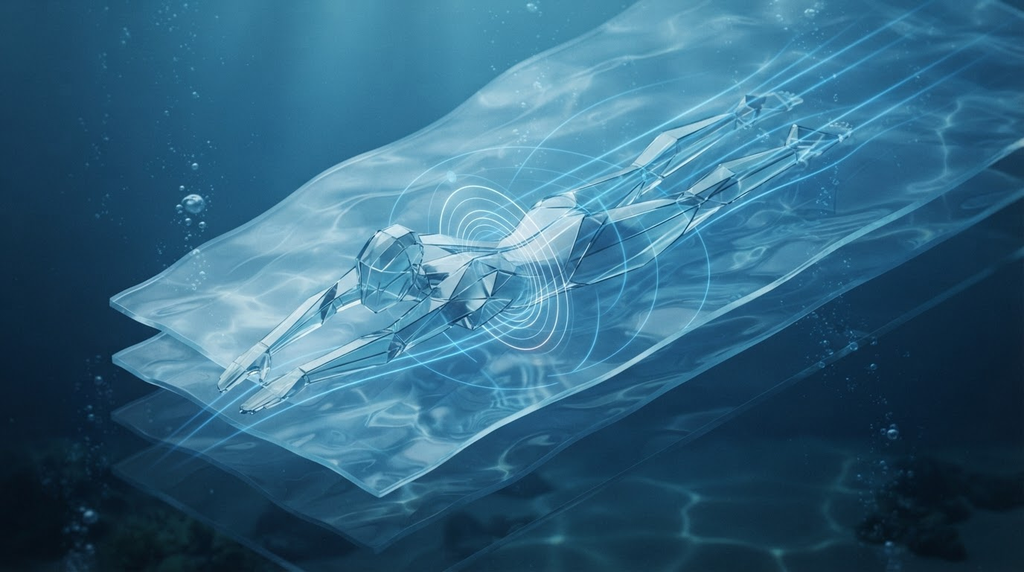
Body position and rotation. Swimming flat on your stomach creates drag. Rotating your hips and shoulders as a unit, roughly 30 to 45 degrees each way, shortens the distance your arms need to travel and lets your bigger muscles share the workload with your shoulders.
A high, engaged catch. Dropping your elbow at the front of the stroke turns your forearm into a paddle pushing water downward instead of backward. Bending the elbow early and pulling water back toward your hips generates far more propulsion per stroke.
Breathing that doesn’t wreck your rhythm. Bilateral breathing, every three strokes, gives you a balanced stroke and the ability to check both sides for other swimmers or sighting landmarks. Plenty of elite triathletes breathe every two strokes on one side instead, and that’s fine too, as long as it stays consistent.
A kick that supports rather than drains. A two-beat kick, one small kick per arm stroke, keeps your legs fresh for the bike. Save the six-beat kick for the last 200 meters of a sprint race, if at all.
Stroke Styles That Work In Open Water
Not every fast pool swimmer swims the same way, and triathlon rewards a slightly different toolkit.
| Technique Focus | Pool Swimming Priority | Triathlon Priority |
|---|---|---|
| Kick intensity | Strong, continuous kick for speed | Minimal kick to save legs |
| Breathing pattern | Sport-specific, often unilateral | Bilateral for sighting and balance |
| Stroke rate | High turnover for sprint speed | Moderate, sustainable turnover |
| Sighting | Not required | Required every 6 to 10 strokes |
| Drafting position | Not applicable | Actively sought behind or beside another swimmer |
Sighting deserves its own mention because it separates good triathlon swimmers from good pool swimmers who happen to be racing triathlon. Lifting your eyes just above the surface every six to ten strokes, without lifting your whole head, keeps you on course without killing your rhythm. Swimmers who skip this skill add hundreds of meters to their race by zigzagging toward a buoy they can’t see.
Building A Technique That Survives Race Day
Technique you can only hold in a calm 25-meter pool is technique that collapses the moment someone kicks you in the goggles. Here’s how I get athletes ready for that reality.
- Practice in open water monthly, even if it means driving to a lake or ocean access point outside your usual routine.
- Do at least one session per month in a wetsuit so your body adapts to the altered buoyancy and shoulder restriction.
- Include contact drills or crowded lane swims to simulate the physical chaos of a mass start.
- Swim negative splits in training, going faster in the second half, to build the habit of staying calm and controlled early on.
- Pair every technique drill with a purpose. Catch-up drills fix timing, fist drills fix feel for the water, and single-arm drills fix rotation.
Drills work, but only when tied to a specific flaw you’re correcting. Swimming drills aimlessly for twenty minutes before your main set is a habit worth breaking today.
Individual Variation Matters More Than You Think
Body proportions, shoulder mobility, ankle flexibility, and even your natural buoyancy all shape what an efficient stroke looks like for you personally. A swimmer with limited shoulder rotation will never replicate Michael Phelps’s catch, and trying to force it invites injury rather than speed. I’d rather see an athlete swim a slightly shorter stroke with excellent rotation than chase a longer reach that wrecks their shoulder by August.
This is where working with a coach who watches you swim in person, or at minimum reviews underwater video, pays off. Cookie-cutter technique advice from a blog post can only take you so far. Your stroke needs adjusting to your body, not the other way around.
Key Takeaways
There’s no single perfect swimming technique for triathlon, and chasing one is a waste of your training time. What exists instead is a set of efficient principles, good rotation, a high catch, controlled breathing, and a light kick, applied to your specific body and adapted for open water conditions.
Train those fundamentals in the pool, then stress-test them in open water, in a wetsuit, and in contact with other swimmers. Do that consistently and your swim leg stops being something you survive and starts being something you use to set up a strong bike and run. Get in the water this week and pick one element from this article to work on. Small, deliberate changes beat chasing perfection every time.